Talk & Connect: A Parent-Child Communication Guide

A meaningful conversation doesn’t have to begin with a big question or a perfectly planned family meeting. Sometimes it starts when you notice that your child is quiet on the way home or when you both have a few minutes together after dinner.
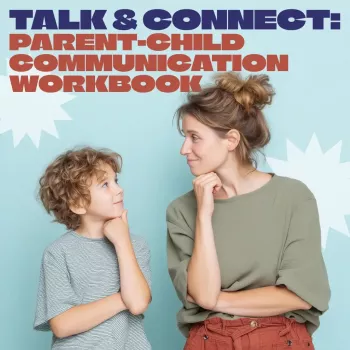
Talk & Connect is a parent-child communication workbook for families who want to make room for those moments. As a positive parenting guide focused on conversation starters and emotional connection, it offers a way to bring more attention to talking together. We encourage you to start small: a little time, a curious question, and a willingness to listen can open the door.
A Simple Way to Start Talking
It can be hard to know what to say when you want to connect with your child. You might ask about their day and hear “fine,” or you may be unsure how to bring up a feeling they seem reluctant to share. A conversation starter gives you a place to begin without making the exchange feel like a test.
Our Talk & Connect parent-child communication workbook is listed at $9.99. It is designed around conversations and emotional connection, with the goal of supporting stronger family bonds.
There doesn’t have to be a perfect answer. A child might share a detailed story, offer a few words, or need time to decide what they want to say. By making room for any of those responses, you show that talking together is about understanding one another rather than getting through a list of questions.
Make Conversation Fit Your Family’s Day
Choose a moment when neither of you is rushing. For some families, a walk makes it easier to talk side by side. For others, a meal or a quiet stretch of the evening provides a natural pause. You don’t need to create a formal setting; a familiar routine can make the invitation feel comfortable.
Let your child respond at their own pace, and share your own thoughts when it feels appropriate. If you ask what made them laugh, you might answer the same question yourself. That small exchange can make the conversation feel mutual rather than like an interview.
The ideas below are general ways to use conversation starters in everyday life, not a list of confirmed workbook contents.
| Moment | Conversation idea | Parent’s role |
|---|---|---|
| After school | Ask what felt interesting or challenging today. | Listen before offering advice. |
| During a walk | Invite your child to share something on their mind. | Allow pauses and follow their lead. |
| At bedtime | Talk about a moment each of you enjoyed. | Keep the exchange calm and unhurried. |
If a familiar space helps you slow down, you might keep a book or a glass of water nearby as part of your evening routine. For a home furnishing option, our Nordic Style Flower Sculpture Side Table can give you a place to set those items. The setting itself matters less than the attention you give each other.
Listen for Feelings, Not Just Answers
Active listening can be simple. Give your child your attention, reflect back what you heard, and ask a gentle follow-up. If they say a game at school felt unfair, you might respond, “It sounds like you were frustrated when you didn’t get a turn. What happened next?”
Acknowledging a feeling doesn’t mean you have to agree with every detail or solve the problem immediately. It means letting your child know you heard them. Try to avoid brushing a concern aside just because it seems small from an adult perspective. Once they feel heard, you can ask whether they want help thinking through what to do.
Some days, your child may not want to talk at all. You can respect that and keep the invitation open: “That’s okay. I’m here if you want to talk later.” The CDC’s guidance on communicating with your child offers more ideas for paying attention and responding to young children.
Build a Connection Habit
Start with a routine that feels manageable. You might choose one evening a week to ask a question, or simply look for a few relaxed minutes during the day. Missing a day doesn’t mean you’ve failed; you can pick up the conversation whenever another opportunity comes along.
Keep the exchange mutual by taking turns sharing. You can also return to a topic another day: “You mentioned that your project was tricky. How is it going now?” Remembering what your child shared shows that their experiences stay with you.
Our team knows that every family has its own rhythm. Explore Talk & Connect and find a comfortable moment to begin talking together.
FAQ
How can I encourage my child to open up?
Choose a low-pressure moment, ask an open-ended question, and listen without interrupting. Let your child know it is okay to talk later.
Do parent-child conversations have to be long to be meaningful?
No. Brief, regular moments of attention can offer opportunities to connect; focus on being present rather than meeting a time target.
What is Talk & Connect designed to help families do?
Talk & Connect is a parent-child communication workbook and positive parenting guide focused on conversation starters and emotional connection.















Leave a comment