Lighted Curio Cabinet: Tempered Glass + Built-In Glow
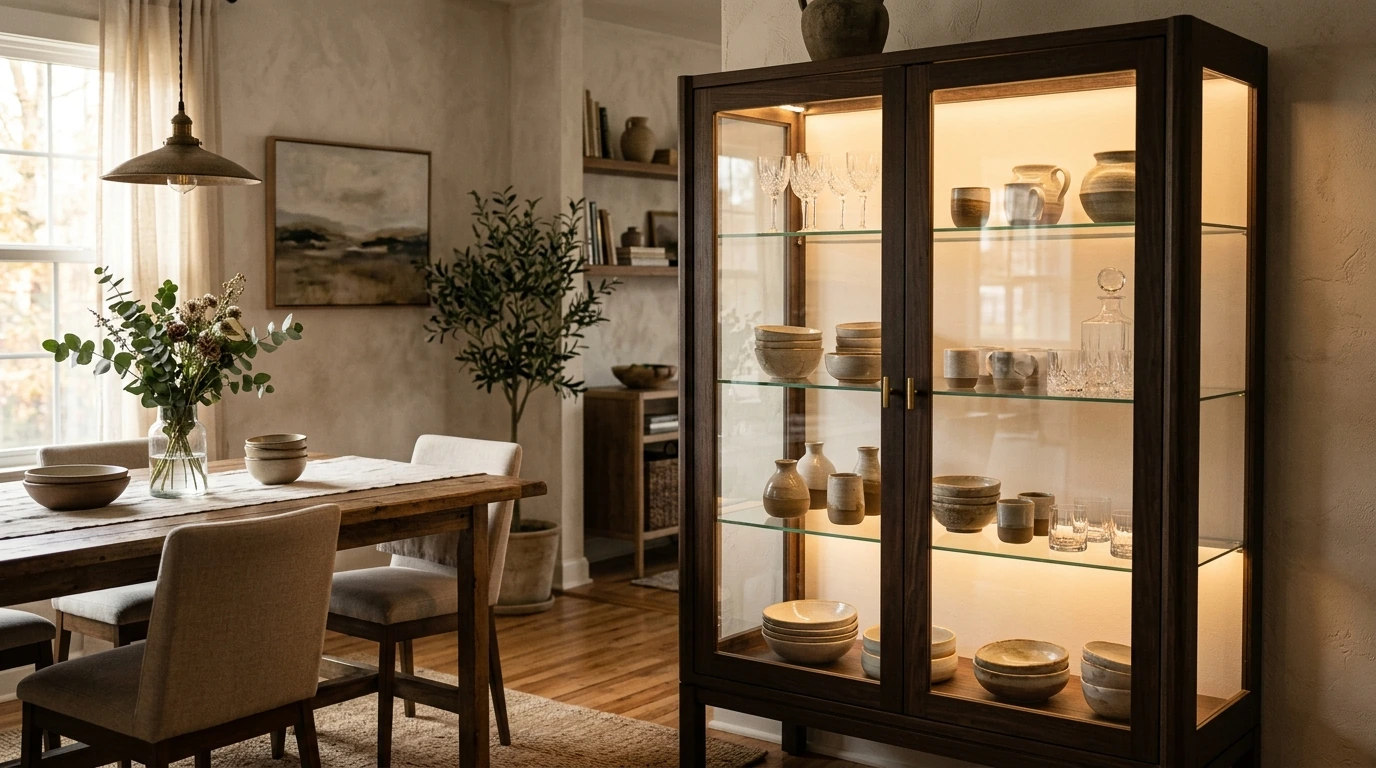
Lighted Glass Display Curio Cabinet with Tempered Glass Doors and Shelves: A Cleaner Way to Showcase What You Love
Some pieces deserve more than a shelf—they deserve a spotlight and real protection. A lighted glass display curio cabinet with tempered glass doors and shelves brings museum-style presence to everyday spaces, keeping collections visible, organized, and safer from dust and accidental bumps. If you’ve been styling open shelving and still feel like your favorites disappear into visual noise (or you’re tired of constant dusting), our team recommends switching to a closed, lighted display so your items look intentional day and night.
What This Curio Cabinet Does Best
A curio cabinet works when you want your display to feel “done,” not temporary. Here’s where it earns its keep in real homes:
- Creates a dedicated display zone that feels intentional, even in an open-plan room.
- Built-in lighting helps details read clearly—glassware sparkle, collectibles show texture, and décor looks finished after dark.
- Tempered glass doors and shelves add confidence for daily use compared with standard glass in similar applications.
- A closed-door display reduces dusting frequency versus open shelving, while still keeping items visually accessible.
- Works as a statement piece for dining rooms, living rooms, offices, and entryways where vertical display makes sense.
Display Planning Checklist
| Consideration | Why it matters | Simple guideline |
|---|---|---|
| Item weight | Protects shelves and keeps lines level | Group heavier pieces low; keep delicate or lightweight pieces higher |
| Spacing | Prevents a cluttered look and avoids contact damage | Leave breathing room around standout items; avoid edge-to-edge stacking |
| Lighting reflections | Glass can reflect bright points and windows | Angle the cabinet away from direct sun and harsh overhead glare when possible |
| Door clearance | Makes daily access easy | Leave enough space to open doors without hitting furniture or walls |
| Theme | A cohesive collection looks higher-end | Display by color family, material, or story (travel, milestones, inherited pieces) |
Why Tempered Glass Matters for Doors and Shelves
When your cabinet gets opened regularly and shelves support meaningful pieces, the glass choice matters. Tempered glass is widely used in household applications because it’s engineered for strength compared with standard annealed glass in similar thickness ranges.
- Better resilience for a high-touch piece: doors get opened and closed, shelves get adjusted and cleaned—tempered glass is a strong choice for that routine.
- Improved peace of mind around everyday bumps (especially in tighter rooms, near hallways, or in homes with kids and pets).
- A cleaner visual: glass shelves keep sightlines open so the display reads airy instead of heavy.
- Pairs naturally with lighting—tempered glass helps the cabinet feel crisp and refined when illuminated.
If you’d like to read more about how tempered glass is made and why it’s used in furniture and interiors, the Glass Association of North America (GANA) is a helpful reference point.
Lighting That Elevates the Whole Room
Built-in lighting isn’t just for showing off collectibles; it’s a design tool. You can use that glow to shape how your room feels after sunset—especially in living rooms, dining rooms, and offices where overhead lighting can feel harsh.
- Use the cabinet as ambient lighting: a soft internal glow can make a living room or dining area feel calmer at night.
- Highlight what you own: lighting turns everyday objects (cookware, ceramics, books, trophies) into décor.
- Balance brightness: if the cabinet sits near a TV or computer screen, softer lighting reduces visual competition.
- Keep materials looking true: light helps prevent dark corners where colors can look muted or muddy.
What to Display: Collections That Look Great Behind Glass
Curio cabinets shine when you treat them like a rotating exhibit. Choose pieces that benefit from visibility and protection, then edit down to the best of the best.
For a cohesive corner, pair your display with a sculptural accent surface like our Nordic Style Flower Sculpture Side Table—it gives you a landing spot for a drink, a small vase, or a “featured item of the week” that doesn’t belong behind glass.
Styling Tips That Make the Cabinet Look Curated (Not Crowded)
If you want an easy “prop” that adds height and structure, try one or two clean-spined books and rotate titles seasonally. A personal finance or lifestyle hardcover like Money Moves: The Empowered Woman’s Guide to Financial Literacy can look polished while still being something you actually pick up.
Placement and Care for a Long-Lasting Display
For general furniture stability guidance—especially if you have kids, pets, or energetic traffic in the home—the U.S. Consumer Product Safety Commission (CPSC) tip-over prevention resource is worth a quick read.
A Simple Setup Mindset
Featured In-Stock Picks from Our Store
- Lighted Glass Display Curio Cabinet with Tempered Glass Doors and Shelves
- Nordic Style Flower Sculpture Side Table
- Money Moves: The Empowered Woman’s Guide to Financial Literacy
FAQ
What is the benefit of tempered glass for cabinet doors and shelves?
Tempered glass is designed to be more durable than standard glass in comparable uses, which helps with everyday opening, closing, cleaning, and shelf loading. It’s a smart choice when you want a display that feels more confident in busy rooms and regular routines.
How do you keep a lighted glass display cabinet from looking cluttered?
Use spacing, group items in small clusters, and vary heights so every shelf has a focal point and breathing room. Limiting your color palette and rotating pieces seasonally also keeps the display looking intentional instead of overfilled.
What should you avoid putting in a lighted curio cabinet?
Avoid overloading shelves, placing unstable tall items near edges, or crowding fragile pieces so they touch and chip. Also keep light- or heat-sensitive items out of direct sunlight, and distribute weight evenly with heavier items on lower shelves.










Leave a comment