Buy vs Build a Loft Bed: Which Is Cheaper?
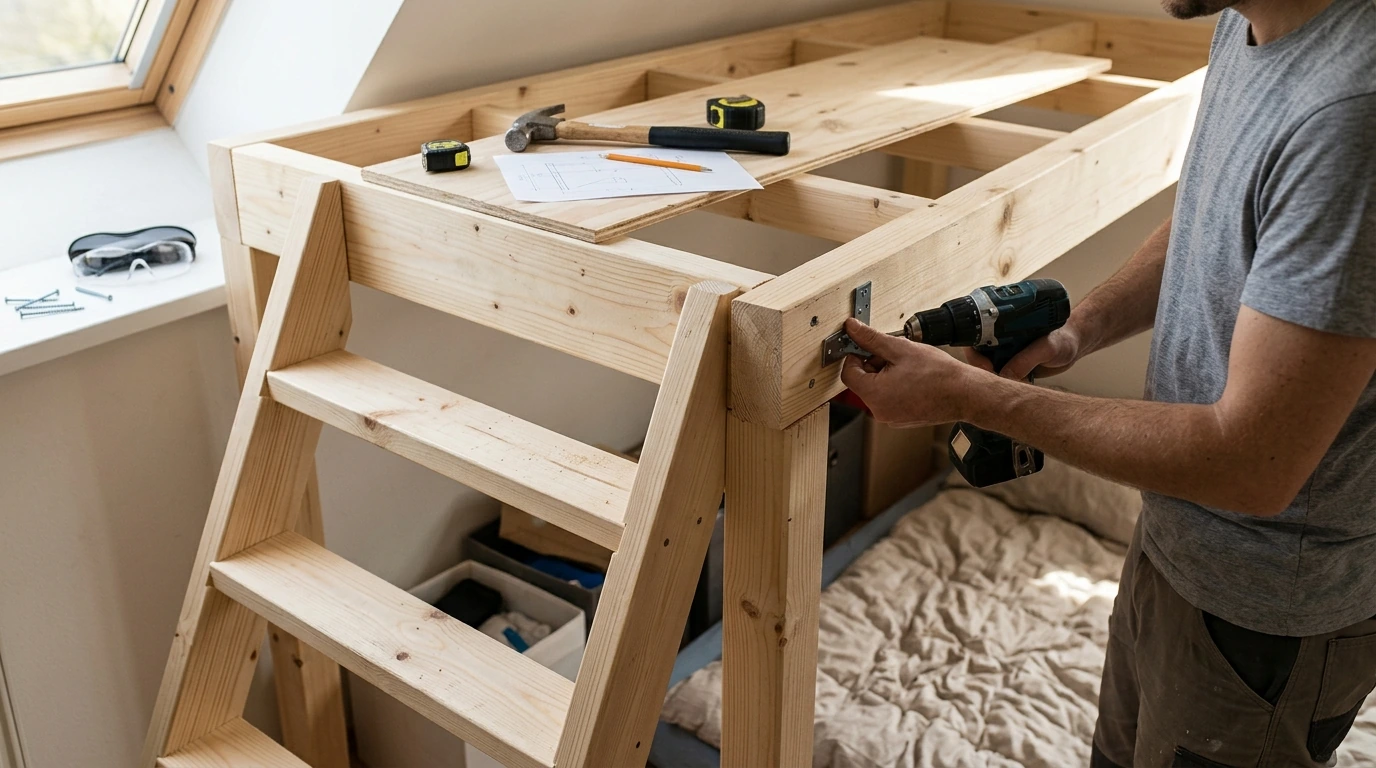
Is it cheaper to buy or build a loft bed?
It depends on what you already have (tools, lumber access, time) and how “finished” you want the bed to feel. For many households, buying a loft bed is often the more predictable way to control total cost because the price includes engineered parts, hardware, and a tested design. Building can be cheaper only when you can source materials affordably and you’re set up to work accurately and safely.
When buying usually costs less
Buying tends to win on value when you want a clean, ready-to-use setup without multiple supply runs. A pre-made loft bed typically includes all fasteners, rails, and an integrated ladder, plus consistent hole alignment and stable joinery. Our team also sees fewer “surprise costs” with buying—like replacing warped boards, upgrading brackets, or purchasing specialty fasteners after the first assembly attempt.
When building can be cheaper
DIY can come out ahead if you already own a saw, drill/driver, level, clamps, and the right bits, and you can get straight, quality lumber at a good price. Building also makes sense if you need a custom footprint, a specific desk clearance, or an odd ceiling height that standard loft beds can’t accommodate. If your plan is simple (platform + legs + bracing) and you can keep the design minimal, material-only costs may beat a store-bought model.
Hidden costs people overlook with DIY
Common add-ons include higher-grade screws/bolts, corner brackets, sandpaper, primer/paint, and a durable topcoat. Time is another real cost: measuring, cutting, sanding, finishing, and cleanup can stretch over multiple days. If the bed needs rework to eliminate wobble or squeaks, costs can climb quickly.
Safety and durability: where “cheapest” can get expensive
Loft beds demand sturdy rails, a secure ladder, and strong anti-rack bracing to prevent sway. If you build, prioritize thick posts, rigid connections, and guardrails that stay solid under movement. If you buy, look for a stable frame and a ladder you can climb comfortably every day.
For a deeper cost breakdown and decision checklist, see our full guide: https://dtbash.com/is-it-cheaper-to-buy-or-build-a-loft-bed/.
FAQ
What mattress thickness works best for a loft bed?
A medium-profile mattress often works well because it balances comfort with safe rail coverage. Make sure the top of the mattress sits low enough that the guardrails still provide meaningful protection, and choose a thickness that doesn’t make the sleeping surface feel too close to the rail top.














Leave a comment